
Mould & Condensation Advice in Driffield and Yorkshire
- Find the cause, not just the stain. Wiping mould away does not stop it returning.
- Advice you can use, for homeowners, landlords and tenants.
- Local to Driffield, covering homes and rental properties across East Yorkshire.
Get a Free Quote
Book your damp investigation today
Why Does Mould Keep Coming Back?
Mould grows where there is moisture. You can clean it off, but if the moisture is still there, the mould returns.
Mould grows where there is moisture. You can clean it off, but if the moisture is still there, the mould returns.
In many homes the moisture comes from condensation. That is steam from cooking, showers, drying clothes and even breathing, landing on cold walls and windows. In others, the cause is a leak, a damp wall or poor ventilation, and sometimes it is a mix of these.

Our mould and condensation advice finds out which one it is. Then you can fix the cause and stop paying for the same clean-up again and again.
Signs of Mould and Condensation
Condensation
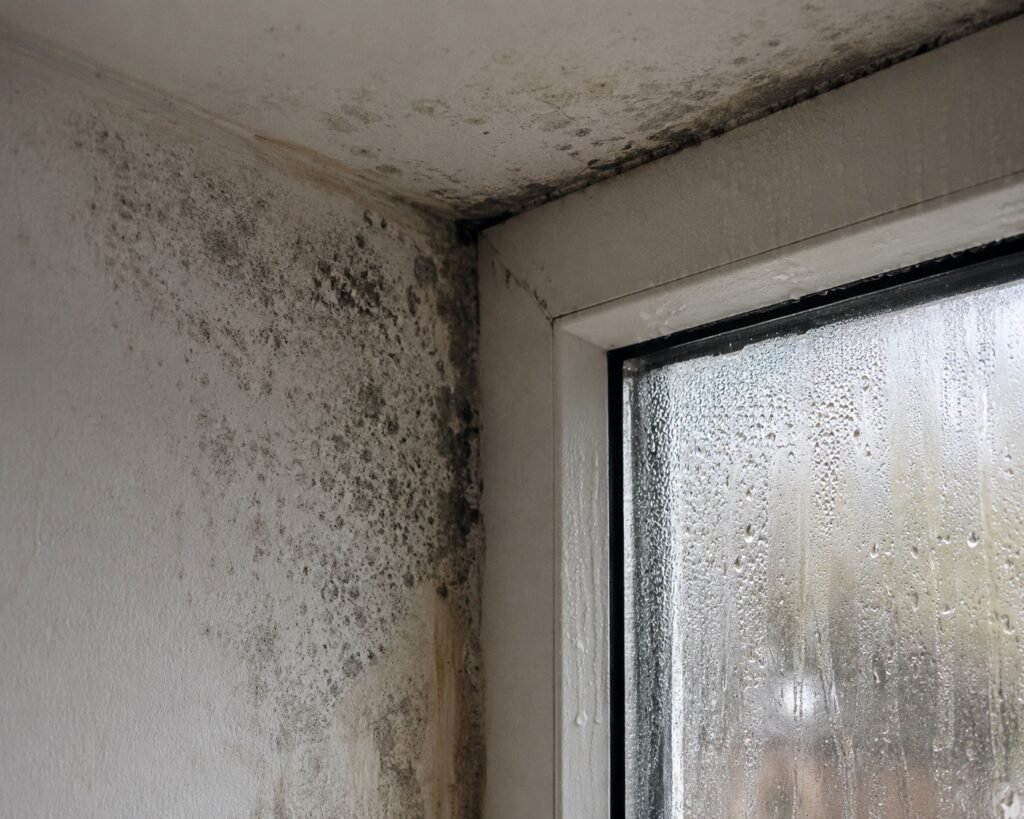
- Water droplets on windows and window frames, especially in the morning
- Wet or mouldy window sills and curtains
- Mould in the corners of cold outside walls
- Damp, misty bathroom or kitchen that takes a long time to clear
Mould
- Black, green or grey spots on walls, ceilings or around windows
- Mould on a bedroom wall or ceiling, often above the bed or in a corner
- Mould behind a wardrobe or furniture pushed against an outside wall
- Mould around the bath, shower or sealant
- A musty smell in the house that does not go away
Any of these on your property? Call us and describe what you see.
Is It Condensation or Damp?
It can be hard to tell. They can look alike, but they have different causes and different fixes. Here are some clues:
| What you notice | Often condensation | Often damp from a leak or wall |
|---|---|---|
| Where it shows | Windows, corners, cold outside walls, behind furniture | A patch on a wall or ceiling, low on a wall, or under a pipe or roof |
| When it is worse | Cold weather, after showers and cooking | After rain, or all the time |
| How it looks | Water droplets, scattered black mould spots | Stains, tide-marks, peeling paint, powdery white salts |
| Surface feel | Wet on windows, mould on the wall surface | Wall can feel damp or cold to the touch, and plaster may crumble |
Clues are not proof. Moisture readings and a look at the building are the safest way to know. If we suspect a leak or damp wall, our damp and water investigations and leak detection can find the source.
What Is Included in Our Mould and Condensation Survey
We look at the whole picture, not just the mould. A typical visit includes:
A chat with you
Who lives in the home? Which rooms? How do you heat and dry washing? When did it start?
A look at the mould
Where it is, how much there is and what pattern it follows.
Moisture readings
A moisture meter tells us how wet walls and ceilings really are.
Humidity and temperature
We check how humid and how cold the air and walls are. Cold surfaces plus moist air is what causes condensation.
A ventilation check
We look at extractor fans, trickle vents, windows, air bricks and chimneys. Poor airflow is a big reason homes get damp air.
Checks for other causes
Leaking pipes, broken gutters, damaged roofs and damp walls can all cause mould. We rule them in or out.
A written report
It explains the cause or causes, how serious it is and what to do, in order of priority.
We focus on finding why the mould is there. Seeing mould is usually enough to know you have it. The real question is what is feeding it.
What You Can Do Yourself to Reduce Condensation
Small habits make a big difference. Try these:
Use extractor fans or open a window when cooking and showering. Keep the bathroom door closed so steam does not spread.
Put lids on pans and keep the kitchen door shut when you cook.
Dry washing outside if you can. If not, use a room with a window open or an extractor, not a radiator in a bedroom.
Keep a steady background heat. Short, hot bursts followed by cold cause more condensation than a lower heat all day.
Air each room for a few minutes a day by opening windows, even in winter.
Leave a gap between furniture and outside walls so air can move.
Wipe water off windows and sills in the morning.
Do not block vents or air bricks.
Many experts suggest keeping indoor humidity between about 40% and 60%. A cheap humidity meter shows you where you stand.
Cleaning Small Patches of Mould
For a small patch, use a mould-cleaning product and follow the instructions on the label. Wear gloves and open a window. Do not brush dry mould, because that spreads spores into the air. If the mould is widespread, keeps coming back or you are not sure why it is there, get advice. A dehumidifier can help lower moisture, but it does not fix a leak or a damp wall.
How It Works
Call Us
Tell us where the mould is and what you have tried. Call 07835 372873.
We Book a Visit
We agree a time that suits you.
We Inspect
We check the mould, ventilation and building, and take readings.
We Work Out the Cause
We explain what is feeding the mould in your home.
You Get a Report and Advice
It sets out clear next steps.
You Decide What to Do
Ask us anything about the report.
Homeowners, Landlords & Tenants
- Homeowners fighting mould that keeps coming back
- Landlords and letting agents who need a damp and mould survey for landlords, to find the cause and have a written record
- Tenants who want a clear picture of what is causing mould in their home. A damp and mould report for tenants can help you talk to your landlord
- Housing associations needing a damp and mould report for a property
- Home buyers worried about damp or mould before they buy. See our pre-purchase damp surveys
We report what we find. We do not take sides between landlord and tenant.
Landlords, Tenants and the Law on Mould
Landlords have a legal duty to keep rented homes safe to live in. Awaab’s Law, named after Awaab Ishak, a toddler who died because of mould in his family’s home, already sets legal time limits for social landlords in England to deal with damp and mould. The government is now consulting on extending these rules to private rented homes.
Rules like this can change. Check GOV.UK or ask your council, Shelter or Citizens Advice for the latest position. We are not lawyers and this is not legal advice.
Professional Certifications & Qualifications


How Much Does It Cost?
We do not put a fixed price on this page because homes vary so much. The cost of a mould and condensation survey depends on:
Call 07835 372873 and we will explain the price before we book you in.
Mould treatment cost depends on the cause. If it is condensation, the fix may be simple and low-cost, such as better ventilation. If it is a leak or damp wall, the repair costs more. Your report will tell you which it is, so you know what to ask for in quotes.
Mould and Condensation in Driffield and East Yorkshire Homes
Local homes and weather make a difference. These are things we see and keep in mind:
Cold, Damp Winters
When it is cold outside, walls stay cold. Warm, moist air inside meets them and turns to water.
Older Homes
Many homes around Driffield and the Yorkshire Wolds are old, with solid walls that feel colder than modern cavity walls. Mould often shows on these cold walls.
Draught-Proofed Homes
New windows, doors and insulation keep heat in. They also keep moist air in if there is not enough ventilation.
Coastal Air
Near Bridlington and Scarborough, damp sea air and driving rain can add to moisture problems, especially on exposed outside walls.
Blocked Chimneys and Air Bricks
Many homes have had old chimneys sealed or air bricks covered. That cuts off natural airflow.
New-Build Homes
Newer homes can have mould in their first years. They are very airtight and the building materials can still be drying out. Good ventilation matters.
We take your type of home into account when we explain what to do, so the advice fits your house, not a generic one.
Why Choose Us
- We find the cause. Our advice is based on what we measure and see in your home.
- Independent. We report and advise. We are not trying to sell you a product or treatment you do not need.
- Local. We are based at 42 Nalton Drive, Driffield.
- Open six days a week. Monday to Saturday, 7am to 10pm, so you can call after work.
- Plain English. You get a report you can understand, and we are happy to talk you through it.
- Joined-up help. If we find a leak, rot or water damage, we can point you to the right service below.
Worried About Health?
Damp and mould can affect your health, especially for babies and children, older people, and anyone with asthma, allergies or other breathing problems.
If you or someone in your home feels unwell and you think mould may be the cause, speak to your GP or call NHS 111. If someone is seriously unwell, call 999.
Then call us on 07835 372873 (Monday to Saturday, 7am to 10pm) so we can look at the cause.
Our Other Services
Mould is often a sign of another problem. These are the other ways we can help:

Damp & Water Investigations
Finds the real source of damp and water ingress, using moisture readings and a plain-English report.
Learn More
Damp & Timber Surveys
Checks for woodworm, dry rot and wet rot in floors, joists and roof timbers. A clear report you can use when buying, selling or repairing a home.
Learn More
Leak Detection
Finds hidden leaks in pipes, heating systems and under floors, with as little digging and damage as possible.
Learn More
Pre-Purchase Damp Surveys
A damp check before you buy, so you know about any problems before you commit.
Learn More
Water Damage Restoration
Help after a flood, burst pipe or serious leak, to dry out and recover your property.
Learn MoreFrequently Asked Questions
Condensation tends to show as water on windows and mould in corners and on cold outside walls, mostly in cold weather. Damp from a leak or wall tends to show as a patch, tide-mark or stain that may get worse after rain. The two can look alike, so a moisture reading is the safest way to tell. See the comparison table above.
Condensation is moisture from inside the home landing on cold surfaces. Damp is water getting into the building from outside, through the ground, a leak or a defect. They have different fixes. Our damp and water investigations look at the damp side.
Reduce the moisture you make, let it escape and keep the home warm. Use extractor fans, put lids on pans, dry washing outside where you can, air your rooms daily and keep a steady heat. See “What you can do yourself” above. If condensation keeps coming back, get advice.
For a small patch, clean it with a mould-cleaning product, following the label, and wear gloves. Then fix what caused it, or it will return. For large areas, repeat mould or if you do not know the cause, get advice.
All mould can irritate the lungs, nose and skin, and it can be a particular concern for babies, older people and anyone with asthma, allergies or breathing problems. You cannot tell how harmful mould is just from its colour. If anyone in your home is unwell, speak to your GP, and get the cause looked at.
It is usually condensation. Bedrooms are cold, and we make a lot of moisture when we sleep. Mould often shows in corners, above windows or behind a wardrobe on an outside wall. It can also come from a roof leak or damp wall, so it is worth checking.
Furniture against a cold outside wall stops air moving and the wall stays cold and damp. Move furniture a few inches away from the wall and keep the room ventilated. If it still returns, we can look at the cause.
New builds are airtight, and the building materials can still be drying out in the first years. Without enough ventilation, the moisture has nowhere to go. Good ventilation usually helps, and we can look at what is happening.
Many experts suggest keeping indoor humidity between about 40% and 60%. A cheap humidity meter, called a hygrometer, shows you the level in each room.
A dehumidifier can help with condensation by removing moisture from the air. It will not fix a leak or a damp wall. Find the cause first, then decide whether you need one.
It depends on the size of the property and what needs checking. Call 07835 372873 for a price for your home. The mould treatment cost depends on the cause, so see the cost section above.
We find the cause and advise on what to do. For small patches, see “Cleaning small patches of mould” above. If you need larger-scale work, your report will help you get the right quotes.
Yes. We can inspect, find the likely cause and write a clear report. Tenants, landlords and housing associations can all ask us. We report the facts and do not take sides.
It depends on the cause. Landlords must keep rented homes in a safe, good state of repair, and some mould is caused by a building fault. Other mould is caused by how a home is used and ventilated. A report that finds the cause can help both sides. This is not legal advice. For your situation, ask Shelter, Citizens Advice or your council.
Awaab’s Law is named after Awaab Ishak, a toddler who died because of mould in his family’s home. It sets legal time limits for social landlords in England to investigate and fix damp and mould. The government is consulting on extending it to private rented homes. Check GOV.UK for the latest.
We are based in Driffield and cover Driffield, Bridlington, Beverley, Scarborough and the surrounding villages. Not sure if we reach you? Call 07835 372873 and ask.
Get the Cause of Your Mould Found
Tired of wiping mould off the wall? Let us find out why it is there.
Get a Free Quote
Book your damp investigation today